
Network modification refers to the process of making strategic changes to existing telecommunications networks to enhance their performance, scalability, and efficiency. These modifications can range from upgrading outdated hardware and software to reconfiguring network architecture or integrating new technologies like 5G and IoT. By adapting to changing demands, network modification ensures that telecom infrastructure remains robust, secure, and capable of supporting modern connectivity requirements.
This page provides a foundational understanding of network modification. For a deeper dive into specific strategies and benefits, visit our Comprehensive Guide to Network Modification.
Imagine a telecom provider experiencing frequent service disruptions during peak hours. By implementing network optimization strategies, such as rerouting data traffic and upgrading key hardware, the provider reduces downtime and improves customer satisfaction. This is just one scenario where network modification proves invaluable.
The telecommunications landscape is constantly evolving, driven by rapid technological advancements and growing user demands. Network modification plays a vital role in keeping pace with these changes by:
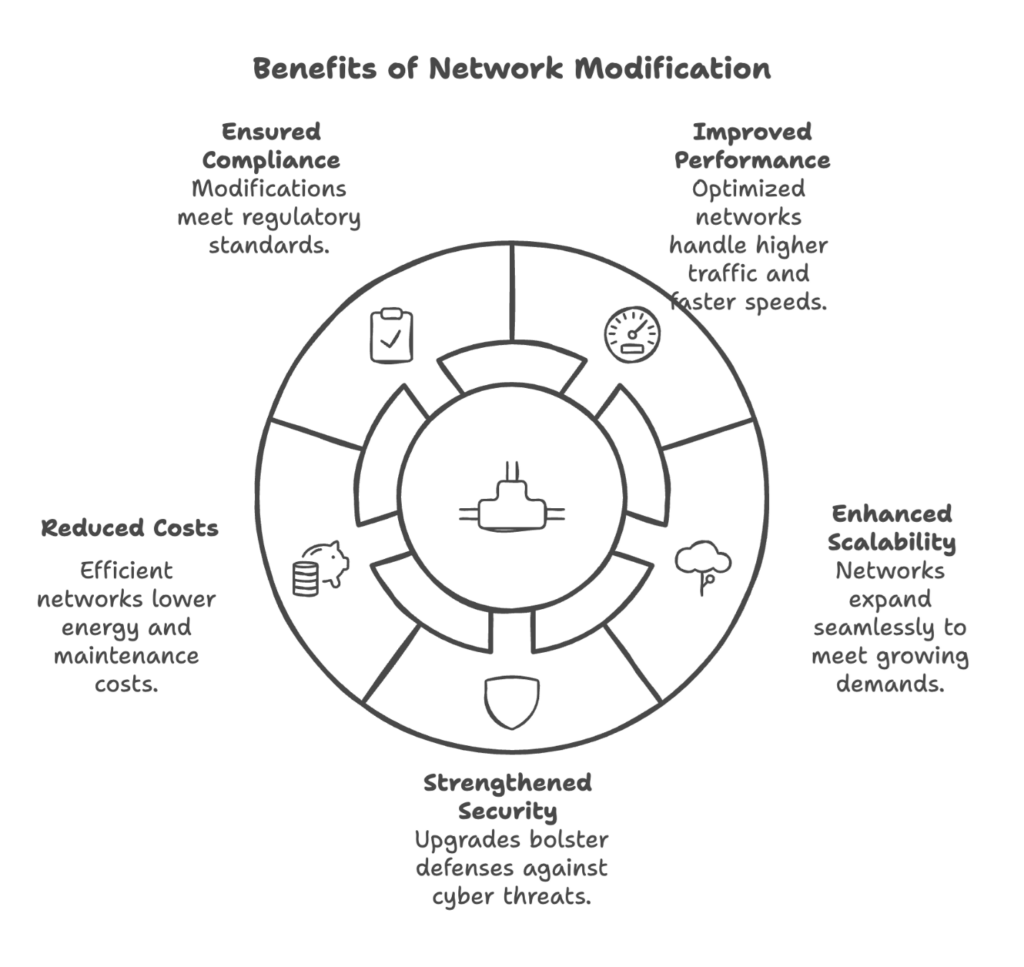
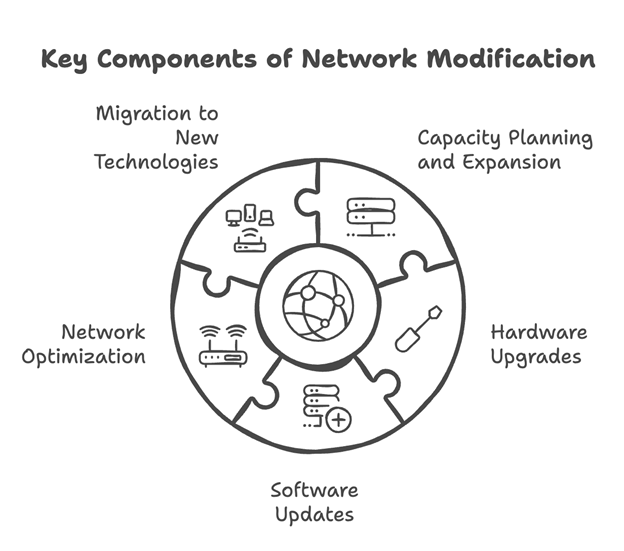
For a detailed exploration of these key areas, check out our Comprehensive Guide to Network Modification.
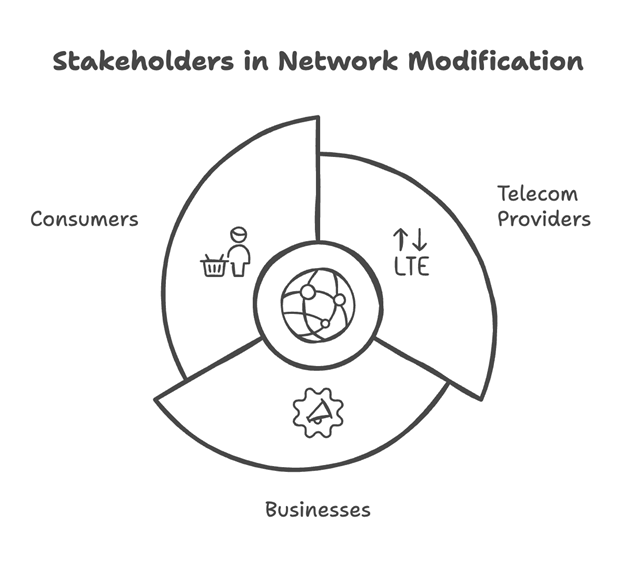
Network modification is beneficial for a wide range of stakeholders, including:
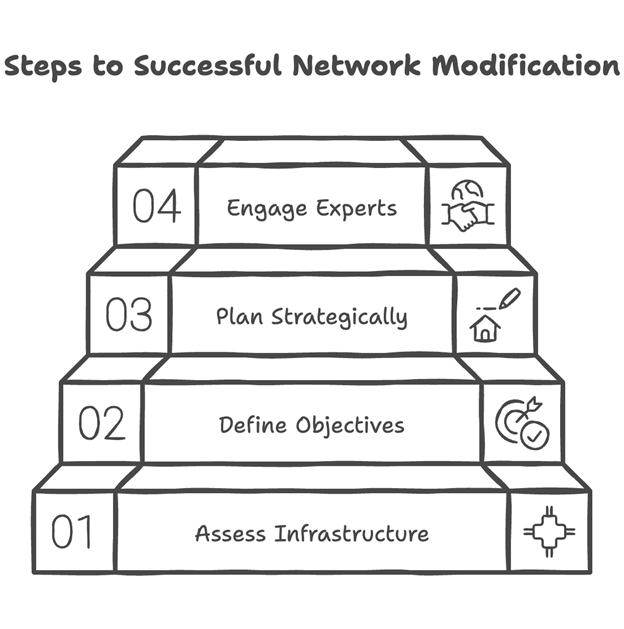
To embark on a network modification project, it is essential to:
This depends on usage patterns and technological advancements. However, most telecom providers review their infrastructure every 2-3 years.
Common indicators include increased downtime, slower speeds, and an inability to support new devices or applications.
Network modification is a transformative process that positions telecom providers and businesses for future growth. By embracing change and investing in strategic upgrades, stakeholders can stay ahead in an increasingly connected world.
The cost of network modification varies depending on the scope of the project, including hardware, software, labor, and downtime considerations. Many organizations conduct a cost-benefit analysis before beginning modifications.
Popular tools include network performance analyzers, traffic monitoring software, and automated configuration tools. These technologies ensure accuracy and efficiency during the modification process.
5G introduces higher bandwidth and lower latency requirements, necessitating upgrades in both hardware and network architecture. Transitioning to 5G often involves substantial reconfigurations and investments.
Network modification is a transformative process that positions telecom providers and businesses for future growth. By embracing change and investing in strategic upgrades, stakeholders can stay ahead in an increasingly connected world.
For in-depth insights and advanced strategies, visit our Comprehensive Guide to Network Modification.
We use cookies to improve your experience on our site. By using our site, you consent to cookies.
Manage your cookie preferences below:
Essential cookies enable basic functions and are necessary for the proper function of the website.
CloudFlare provides web performance and security solutions, enhancing site speed and protecting against threats.
Service URL: developers.cloudflare.com (opens in a new window)
Trustindex collects reviews from platforms such as Google, Facebook and Tripadvisor and displays them on a site as embedded review widgets, rating badges and social media feeds.
Service URL: www.trustindex.io (opens in a new window)
A powerful content management system for creating and managing websites easily and efficiently.
WP Consent API is a plugin that standardizes the communication of accepted consent categories between plugins.
Statistics cookies collect information anonymously. This information helps us understand how visitors use our website.
Bing, powered by Microsoft, is a search engine providing web, image, video, and map search capabilities.
Google Analytics is a powerful tool that tracks and analyzes website traffic for informed marketing decisions.
Service URL: policies.google.com (opens in a new window)
Google Tag Manager simplifies the management of marketing tags on your website without code changes.
Marketing cookies are used to follow visitors to websites. The intention is to show ads that are relevant and engaging to the individual user.
Google Maps is a web mapping service providing satellite imagery, real-time navigation, and location-based information.
Service URL: policies.google.com (opens in a new window)
Needed for certain functions and features of the website to operate
These cookies are needed for adding comments on this website.
Vimeo is a video hosting platform for high-quality content, ideal for creators and businesses to showcase their work.
Service URL: vimeo.com (opens in a new window)
A video-sharing platform for users to upload, view, and share videos across various genres and topics.
Service URL: www.youtube.com (opens in a new window)
You can find more information in our Cookie Policy and Privacy Policy.