
Investing in network modification can be a significant decision for telecom providers, businesses, and organizations. Understanding the cost factors and the potential return on investment (ROI) is essential for making informed choices. This page explores the key cost considerations, methods for calculating ROI, and strategies for maximizing financial and operational benefits.
Network modification projects require a clear understanding of associated costs to ensure financial viability and effective resource allocation. By identifying key expenses and potential hidden fees, businesses can better plan their investments and avoid unexpected challenges.
Key expenses in network modification include hardware upgrades, software investments, and labor costs. Each expense category contributes to the overall success of a modification project and must be evaluated for ROI potential.
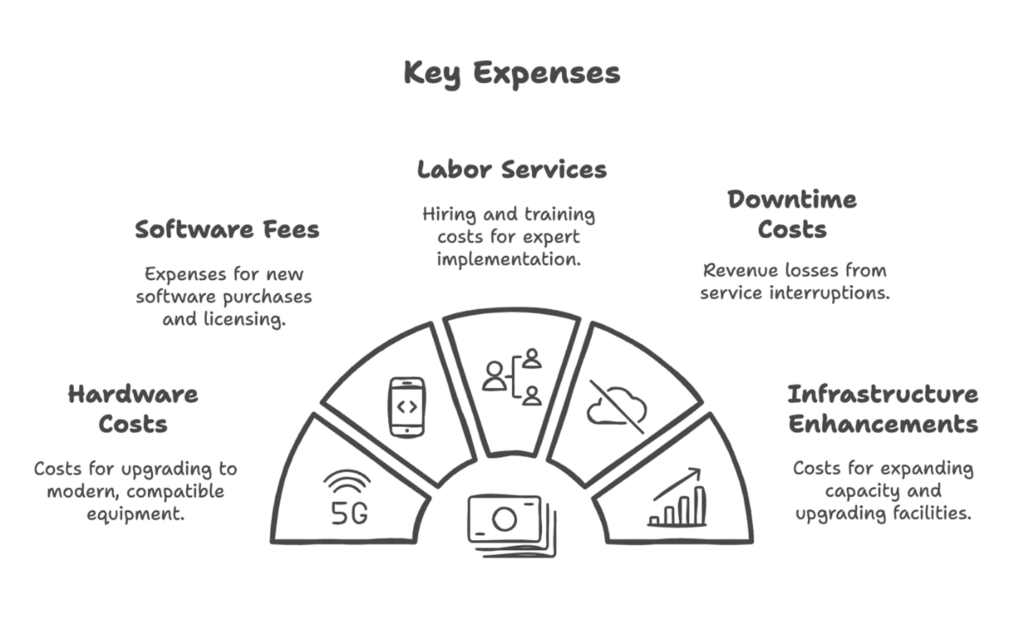
In addition to visible expenses, hidden costs can significantly impact the total investment in network modification. Being aware of these costs helps organizations avoid budget overruns and ensures smoother implementation.
Calculating ROI provides a measurable way to assess the success of network modification investments. By balancing total costs with tangible and intangible benefits, businesses can make informed decisions about future upgrades.
ROI is a critical metric for evaluating the financial benefits of network modification projects. Use the following formula as a starting point:
ROI = [(Total Benefits – Total Costs) / Total Costs] x 100
To accurately calculate ROI, organizations must assess all costs and benefits comprehensively. This structured approach ensures transparency and clarity in evaluating the financial impact of network modifications.

A real-world ROI calculation provides a practical example of how network modification investments translate into measurable financial gains. By understanding this process, businesses can better forecast the outcomes of their own projects.
A telecom provider invests $1,000,000 in network upgrades and expects annual savings of $300,000 from reduced downtime and energy costs. The ROI over five years:
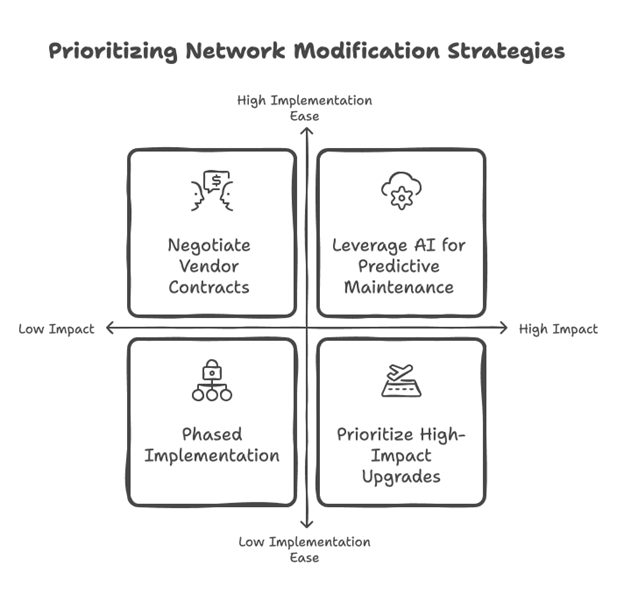
Maximizing ROI requires strategic planning and execution. By focusing on high-impact areas and leveraging modern technologies, organizations can ensure their network modification projects deliver the greatest value.
Strategic approaches, such as phased implementation and leveraging AI, are essential for optimizing the benefits of network modification projects. These strategies minimize risks and maximize returns.
Examining real-world examples of network modification projects highlights the tangible benefits of investing in these initiatives. From cost savings to operational efficiency, these success stories underscore the importance of strategic planning.
A detailed case study illustrates how network modification can drive significant improvements in cost efficiency and service reliability. This example provides actionable insights for organizations planning similar initiatives.
A regional telecom provider invested $2 million in network upgrades, focusing on edge computing and AI-driven optimization. Over three years, they achieved:
Industry data offers a broader perspective on the effectiveness of network modification projects. These insights help organizations benchmark their efforts and identify best practices for achieving ROI.
Energy-efficient upgrades can reduce utility costs by up to 20% annually.
Understanding the intricate balance of costs and returns is pivotal for network modification success. With thorough planning, organizations can transform their network infrastructure while securing significant financial and operational benefits.
Understanding the cost and ROI of network modification is essential for driving both short-term and long-term success. By evaluating expenses, calculating benefits, and implementing strategic improvements, telecom providers can optimize their infrastructure while achieving significant financial returns.
For detailed tools and resources to assist in planning your next project, explore our Comprehensive Guide to Network Modification.
We use cookies to improve your experience on our site. By using our site, you consent to cookies.
Manage your cookie preferences below:
Essential cookies enable basic functions and are necessary for the proper function of the website.
CloudFlare provides web performance and security solutions, enhancing site speed and protecting against threats.
Service URL: developers.cloudflare.com (opens in a new window)
Trustindex collects reviews from platforms such as Google, Facebook and Tripadvisor and displays them on a site as embedded review widgets, rating badges and social media feeds.
Service URL: www.trustindex.io (opens in a new window)
A powerful content management system for creating and managing websites easily and efficiently.
WP Consent API is a plugin that standardizes the communication of accepted consent categories between plugins.
Statistics cookies collect information anonymously. This information helps us understand how visitors use our website.
Bing, powered by Microsoft, is a search engine providing web, image, video, and map search capabilities.
Google Analytics is a powerful tool that tracks and analyzes website traffic for informed marketing decisions.
Service URL: policies.google.com (opens in a new window)
Google Tag Manager simplifies the management of marketing tags on your website without code changes.
Marketing cookies are used to follow visitors to websites. The intention is to show ads that are relevant and engaging to the individual user.
Google Maps is a web mapping service providing satellite imagery, real-time navigation, and location-based information.
Service URL: policies.google.com (opens in a new window)
Needed for certain functions and features of the website to operate
These cookies are needed for adding comments on this website.
Vimeo is a video hosting platform for high-quality content, ideal for creators and businesses to showcase their work.
Service URL: vimeo.com (opens in a new window)
A video-sharing platform for users to upload, view, and share videos across various genres and topics.
Service URL: www.youtube.com (opens in a new window)
You can find more information in our Cookie Policy and Privacy Policy.